Size the pipe
Sewer Pipe Calculator
The other half of the job: sizing. Diameter, slope, velocity and depth with Manning, and a gravity collector laid out segment by segment. No network model, no simulation engine.
Free in the app
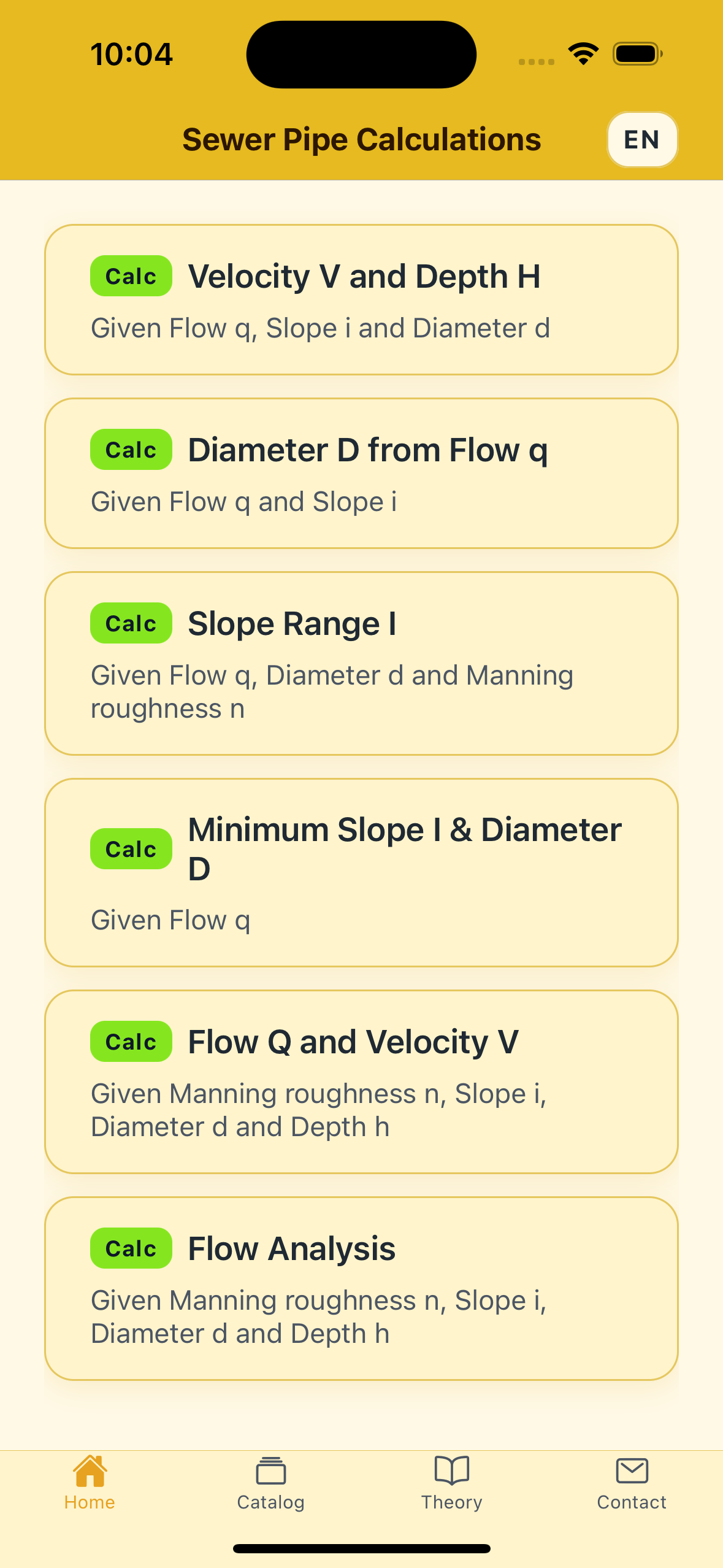
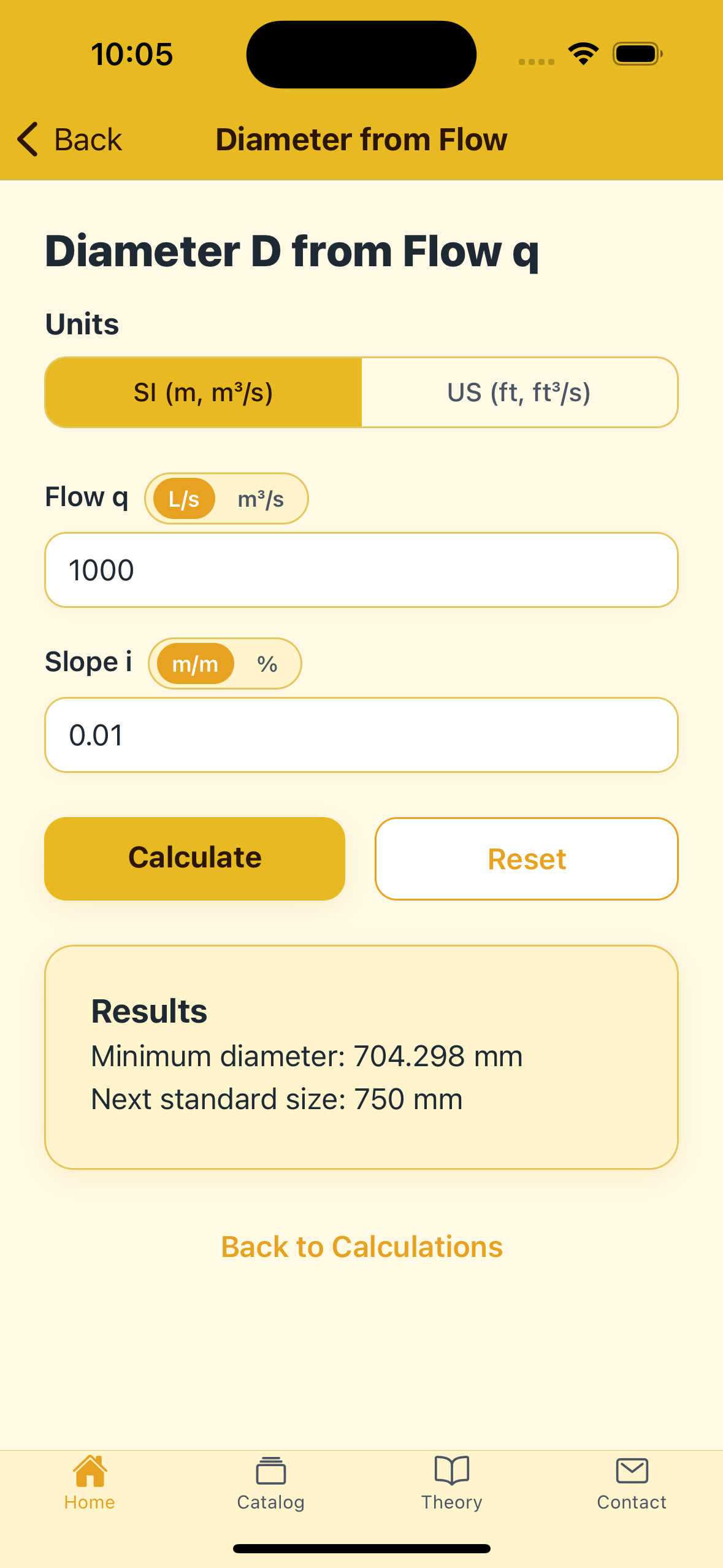
- Six Manning calculators: velocity & depth, diameter from flow, slope range, minimum slope & diameter, flow & velocity, flow analysis
- Tractive force τ reported next to velocity and flagged against the self-cleansing minimum
- Standard pipe catalog that rounds up to the next commercial size
- SI and US units on every screen
Four purchases
One-time purchases, no subscription. Buy the one your project needs — or none, and keep using the six calculators for free.
Pro General
Turns the app from a place to check a number into part of a documented workflow.
- PDF report of any calculation, with your own header — project, engineer, company
- Save a calculation by name and load it back with its units and results
- Build and store your own pipe catalogs
Structures Pack
A real network is not only pipe: it has siphons crossing obstacles, pumping stations, overflows and manholes that eat energy. One purchase unlocks five calculators.
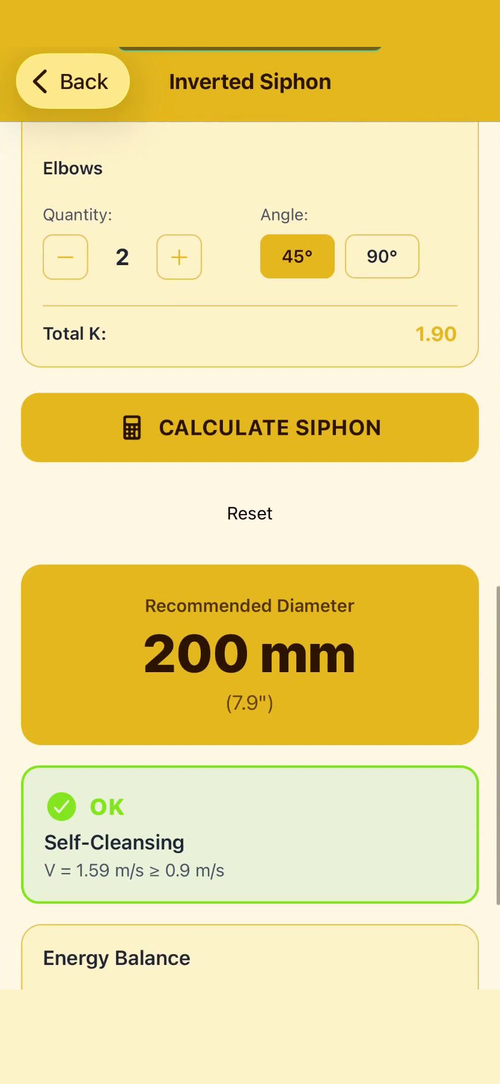
- Inverted siphon — auto-sizes it: walks the commercial diameters and picks the first one with a positive energy margin that also meets self-cleansing velocity, and shows the full energy balance
- Pumping station — wet well volume from starts per hour, pump power in kW and HP, and the cycle analysis
- Weirs & overflows — frontal, side (with the flow that continues downstream) and design mode for the crest length you need
- Minor losses — quick K·v²/2g with presets, or a detailed manhole that derives K from direction change, diameter change and drop
- Orifices & gates — free or submerged discharge, sluice gates with automatic free/drowned detection, and a design mode
Force Main Pack
The one pressurized module: the rising main that leaves a pumping station, in three modes that feed each other.
- Total dynamic head — static lift plus Hazen-Williams friction and minor losses, checked against the 0.6–3.0 m/s range, with a button that sends the result straight to the pumping-station module
- Economic diameter by Bresse, with an adjustable coefficient
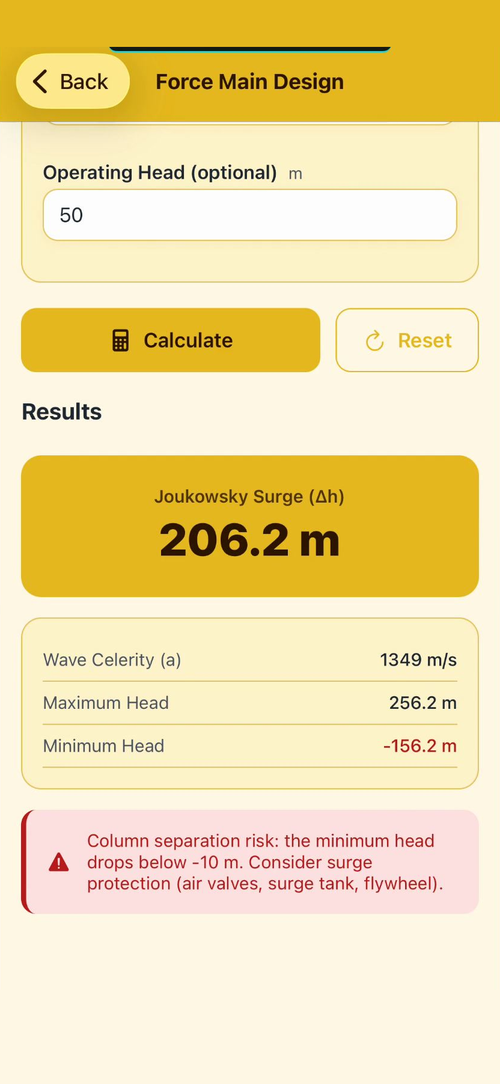
- Water hammer — wave celerity from the pipe material and wall thickness, Joukowsky surge, the maximum/minimum head envelope, and a warning when the minimum drops far enough to risk column separation
Collector Designer
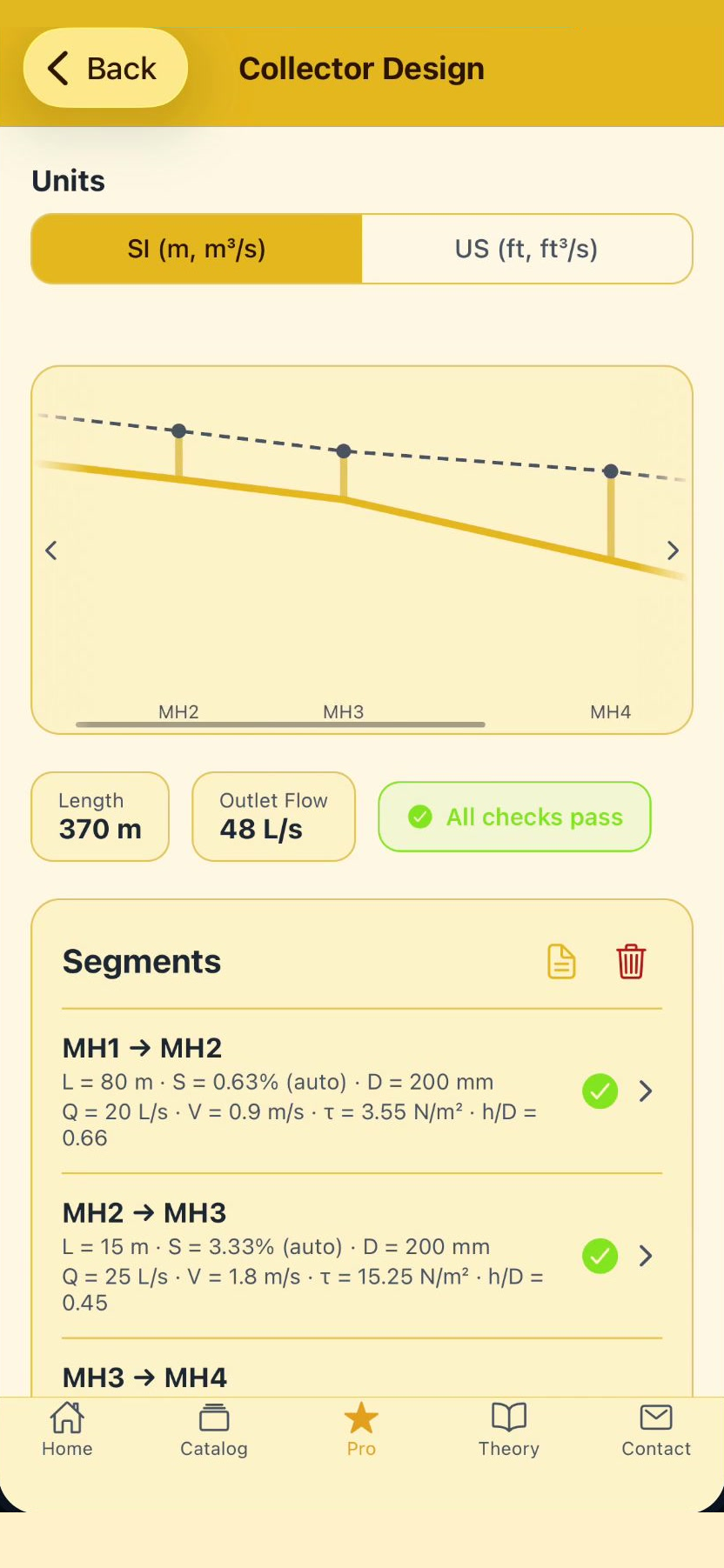
Designing a collector is not sizing one pipe — it is a chain of segments where flow accumulates downstream and each invert conditions the next. This is that spreadsheet, done properly.
- Each new segment inherits the previous invert and accumulates the flow already in the line
- Slope either automatic — the minimum that meets self-cleansing and cover, following the ground when it falls faster — or set by hand
- Every segment checked against five criteria: velocity, tractive force, h/D ≤ 0.8, cover and surcharge
- A traffic light per row tells you which criterion failed, not just that something did
- Longitudinal profile drawing ground, manholes and pipe, with failing segments in red
- Exports the whole design table to PDF — included in this pack, no need to also buy Pro General